Practice disc golf putting with one basket and a few discs
· Editorial team sandiegonewslisa.com
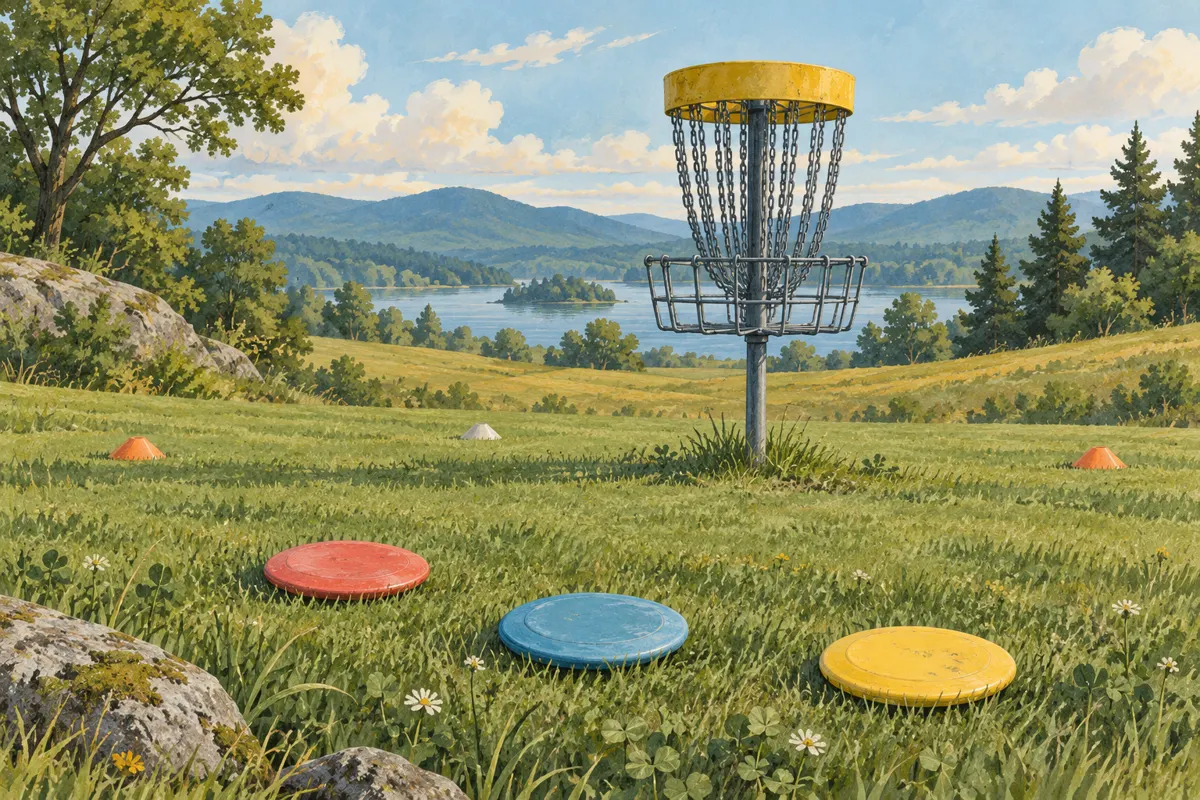
Practice disc golf putting by starting close to the basket, repeating the same setup before each throw, and moving back gradually. One basket and a few putters are enough for a focused session. Track makes and attempts at each distance so you can compare your consistency over time.
Set up a small practice area
Choose a spot with clear space around the basket and a throwing line that keeps people out of the path of your discs. Use the putters you already have. Matching putters give you a consistent feel, but you can begin with a mixed set and note which disc you use.
The following distances, repetition counts, and progression rules are an editorial proposal for a manageable beginner session. Adjust them to your available space and current ability.
- Gather two to four putters, a distance measure, and a notebook or phone.
- Mark three positions: 8, 12, and 16 feet from the basket.
- Move the starting mark closer if 8 feet feels difficult.
- Place spare discs where you can reach them without changing your footing.
Repeat a simple setup before every putt
Both supplied practice guides emphasize a consistent pre-putt routine. Use a comfortable stance and a short sequence you can repeat during a round. Avoid rushing through your stack of discs: each attempt should begin with a fresh setup.
- Set your feet at the mark and settle your balance.
- Check that the disc sits comfortably in your hand.
- Choose a specific aiming point on the chains.
- Make one relaxed rehearsal motion if it helps you.
- Look at your target, putt, and pause before reaching for another disc.
Keep the routine brief enough that you will actually use it. During this session, choose one thing to pay attention to, such as finishing balanced. Changing your stance, grip, and throwing motion together makes it harder to understand what affected the result.
Start close and earn the next distance
Infinite Discs describes beginning with short putts and gradually working outward, returning closer after a miss. The starting distance should suit the player. For a beginner, the useful principle is to build a session around achievable putts before adding distance.
- Take a few easy warm-up putts at your closest mark.
- Make ten counted attempts there, retrieving your discs as needed.
- Move to the next mark if you make at least eight.
- If you make fewer than eight, repeat that distance once.
- After a second set below eight, move closer for your next set.
Eight out of ten is a suggested practice threshold, not an established standard. Stop the ladder after four counted sets so a difficult distance does not consume the whole session. Record every set, including the ones that send you closer.
Finish with individual putts
Infinite Discs also recommends reserving part of practice for the full routine used on the course. With one basket, you can do this by changing positions and treating each putt as a separate attempt.
For a proposed finish, take six individual putts, alternating among your three marked distances. Use one disc, complete your routine, then retrieve it before moving. Include positions from another side of the basket if the area is clear. Count the first attempt from each position; resist immediately repeating a miss until it goes in.
Track consistency with a short note
Keep the record simple: date, distance, makes, and attempts. An entry could read: “8 feet: 9/10; 12 feet: 6/10; 12 feet: 7/10; 8 feet: 8/10.” Add one observation, such as “most misses were low,” and note wind if it noticeably affected the session.
Compare results at the same distance instead of combining every attempt into one score. A session with more long putts may have fewer makes overall. For the next session, the editorial suggestion is to keep the same marks and progression rule. That gives you a clearer comparison before you extend the practice area.