Organize a small entryway so wet shoes can dry without clutter
· Editorial team sandiegonewslisa.com
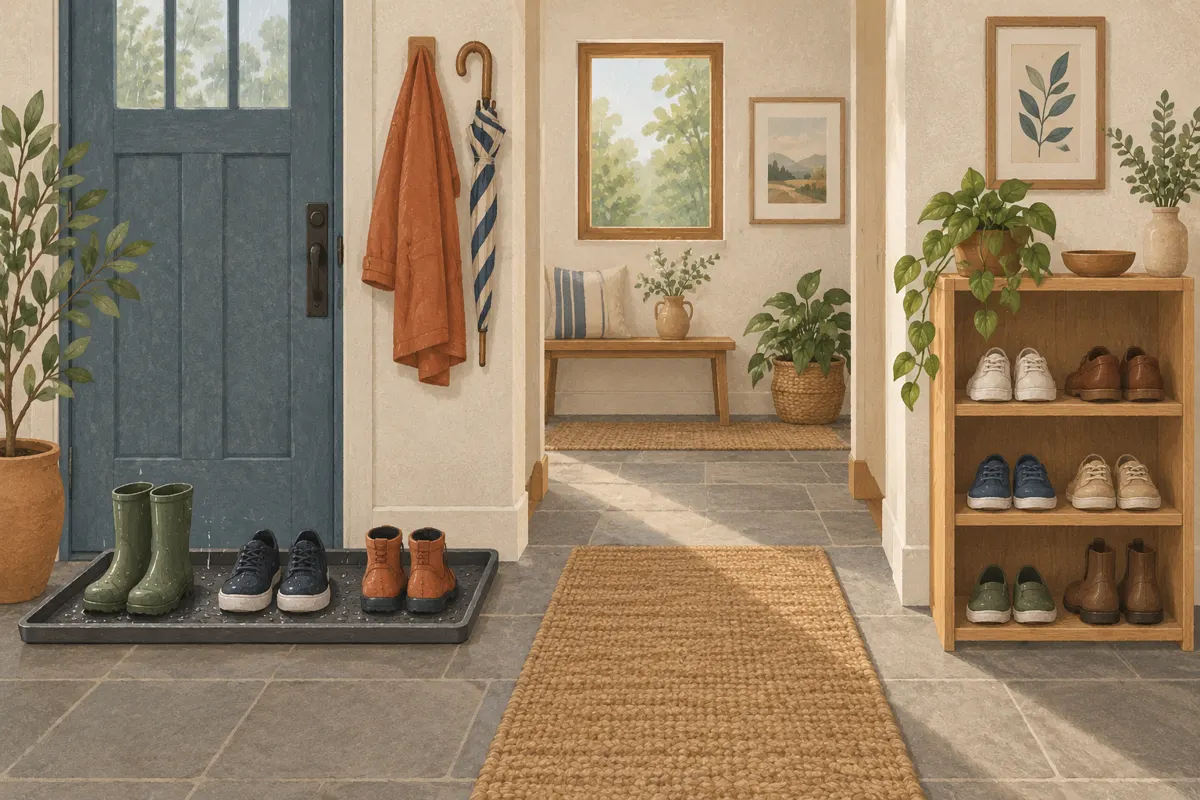
Give wet shoes a washable tray near the door, leave space around each pair, and move them to a separate storage spot once they are dry. This keeps the drying area available for the next arrival. The proposed setup below uses a small, defined floor area and a simple routine you can adapt to your entryway.
Choose a spot that keeps the doorway clear
Start by clearing the shoes from your entryway and opening the door fully. Look for a place beside the walking route where a tray can sit without catching the door or forcing anyone to step over it. Check nearby closet doors and drawers, too. A spot that looks unused may still be needed when you reach for a coat.
Our proposed layout has two destinations: an open tray for wet footwear and a nearby shelf, basket, or cabinet for dry pairs. Keep only regularly worn shoes at the entrance. Moving occasional footwear elsewhere makes room without adding furniture.
Use a washable tray that fits your shoes
A shoe tray gives drips and dirt a defined place to collect. Choose a washable tray with a raised edge and enough room for your usual wet pairs to sit side by side. Check it against your largest shoes or boots before choosing its size. A narrow tray is useful only if the footwear stays inside it.
- A surface you can wipe or rinse without complicated disassembly.
- An edge that contains drips while allowing easy shoe placement.
- A stable base that sits flat in its intended spot.
- A size you can comfortably lift and carry for cleaning.
For a DIY version, consider a shallow, washable utility tray you already own, provided it is watertight and fits the space. Keep the arrangement simple: loose stones or decorative fillers add pieces to clean and make the tray heavier to empty.
Leave wet footwear open to the air
Treat the tray as a temporary drying area. Place shoes in a single layer with gaps between them instead of stacking pairs. Leave the area open rather than enclosing damp footwear in a lidded basket or closed storage bench. If the tray sits beneath a bench, make sure shoes have open space around and above them.
- Remove loose mud and wipe excess water from the outside of the shoes.
- Set both shoes fully inside the tray, with space between neighboring pairs.
- Loosen laces and open tongues where the shoe design allows. Follow the footwear’s care instructions for removable insoles and drying.
- Empty collected water so soles are not left sitting in a puddle.
- Check that the inside and outside are dry before returning the pair to storage.
Avoid promising yourself a fixed drying time; different shoes and levels of wetness need different amounts of time. Follow the manufacturer’s guidance before using heat or a drying device.
Give dry shoes a compact home
Choose dry-shoe storage around the space you have. A shallow cabinet can suit a narrow hall, an open shelf can fit beneath an existing bench, and an over-the-door organizer can use a nearby closet door. Check clearance and footwear fit before adding any storage piece.
For a shared entryway, assign each person a basket, cubby, or shelf section. Our proposal is to limit that space to their current everyday pairs. Store less-used footwear elsewhere and return dry shoes to their assigned place whenever the tray starts filling. Avoid placing a drying tray beneath dry shoes where drips from an upper shelf could reach them.
Build cleanup into the routine
After wet arrivals, check for standing water and wipe splashes from the surrounding floor. When the tray is empty, remove grit, wash it as needed, and dry its underside and the floor beneath before putting it back.
Add a weekly reset: return dry pairs to storage, remove shoes that are no longer in regular use, and check that the doorway remains clear. If wet pairs repeatedly overflow, first clear finished pairs from the tray. Then consider a second temporary washable tray in another suitable spot. Keep that overflow area out of the walking route and put it away once the shoes are dry.